
Arcade Redemption Prize Buying Guide for 2027
by Madison Amico | October 20, 2026
The prize counter is often the last thing guests see before they leave your venue, and it is a big part of what brings them back. A well-stocked counter gives players a reason to keep swiping, gives families something to take home, and turns a one-time visit into a monthly family outing. For 2027, that means planning for a wider audience than ever, and 2027 is right around the corner.
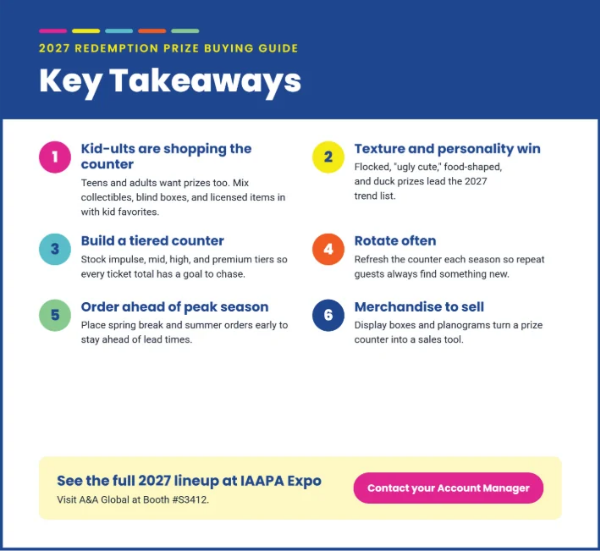
Kids still drive demand for arcade redemption prizes, but teens and adults now shop the counter too, chasing collectibles, licensed characters, and the viral items they saw online.
For arcade owners, family entertainment center (FEC) operators, and prize buyers planning their 2027 inventory, it may feel overwhelming trying to curate an assortment plan for 2027, but we’re here to help! In this guide, we’ll cover the top arcade prize trends for 2027, the best FEC prizes and categories to stock, prize counter ideas that boost repeat visits, how to build prize tiers that protect your margins, and how to buy wholesale redemption prizes ahead of peak season. Whether you run a single arcade or prize counters across multiple locations, use this guide as your planning checklist for the year ahead.
What Are Arcade Redemption Prizes?
Arcade redemption prizes are the toys, plush, candy, and novelty items players earn by winning tickets or points on redemption games, then trade in at a prize counter. Also called ticket redemption prizes or arcade ticket prizes, they are priced in tickets, from low-ticket bin items to high-ticket premium prizes, so players of every skill level and budget can walk away with something.
How ticket redemption works
Guests play skill or chance games like skee-ball, coin pushers, and wheel spinners. Each game pays out tickets, either as paper tickets or as points loaded onto a game card. When they’re done playing, guests bring their total to the prize counter and choose from prizes priced at different ticket values. Many players save up over several visits to reach a bigger prize, which is one reason a well-planned counter keeps guests coming back.
Redemption vs. merchandisers vs. crane games
- Redemption games pay out tickets, which players exchange for prizes at the counter.
- Merchandisers, like claw and crane machines, award the prize directly inside the machine.
- Prize counters often serve both: operators stock counter prizes for redemption and plush sized for crane machines.
How to Build a Profitable Prize Counter in 2027
Knowing how to set up a prize counter comes down to two jobs: giving players something worth chasing, and protecting the margin your redemption games earn. The way to do both is to price prizes in tiers, set a payout target for your games, and refresh the counter often enough that repeat guests always see something new.
Redemption Prize Tiers Explained
Most successful counters are built in tiers, so a player with 50 tickets and a player with 5,000 tickets both have a reason to visit the counter. Lower-cost prizes carry a higher markup, and premium prizes are priced closer to cost, so they feel reachable. Industry guidance commonly recommends a graduated markup of 2 to 3 times cost on small counter items, 1.5 to 2 times on mid-range items, and close to 1 times on high-priced items.
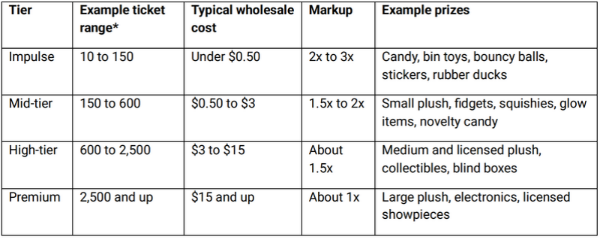
*Assumes a ticket value of 1 cent. Adjust to your own ticket value and game settings.
Premium prizes may not move often as impulse or mid-tier, but they matter. They draw attention to the counter, give players a long-term goal, and encourage guests to save tickets across multiple visits.
What Payout Percentage Should Redemption Games Have?
Your redemption payout percentage is the value of the tickets your games give out compared to what guests spend to play. The formula is:
Payout % = (tickets paid out × ticket value) ÷ game revenue
Industry guidance generally puts a healthy redemption payout between 25% and 35%. At a 30% payout and a 1-cent ticket, a guest who spends $10 on games earns about 300 tickets. Payout varies by game. Some wheel and ticket-jackpot games run higher, while classic skill games like skee-ball often run lower, so manage payout across the whole game room, not one machine at a time.
Your prize cost, or cost of goods sold, should land in a similar range. A common target for redemption counters is 25% to 30% of redemption game revenue. If your prize costs climb well above your target, review your payout target, ticket pricing, and game settings first. If all three are within range, we recommend adjusting your cost per play to bring prize costs back in line with your target.
How Many Prizes to Stock Per Tier
There is no single correct SKU count. It depends on your counter space, guest volume, and audience. A more useful rule of thumb is how you split your prize budget:
- About 30% on low-cost impulse items under $1
- About 40% on mid-tier items between $1 and $5
- About 30% on high-tier and premium items over $5
By unit count, the counter should lean small. Low-ticket prizes move fastest, so most of your units will sit in the impulse and mid tiers, even when premium items take a large share of the budget.
Adjust the mix for your target audience. Who your venue serves should shape both what you stock and what those prizes are worth. If your location pairs an arcade with soft play, your audience is younger. Those guests usually want to leave with something in hand that day, so your counter should lean toward impulse and mid-tier prizes. If your location pairs an arcade with a bar or high-speed go-karts, your audience is older and much more likely to save tickets across visits for a bigger prize. That makes a stronger high-tier and premium selection worth the investment. Building your counter around your venue’s real audience helps you choose the right items and price them at the right ticket values.
Plan for seasonal items too. Holiday and seasonal prizes often account for 15% to 20% of an annual prize budget.
How Often to Rotate Your Prize Counter
Many operators refresh their prize counter every 4 to 6 weeks, adding a batch of new items each month and phasing out slow sellers. Novelty and trend-driven items, like viral toys, should rotate even faster because their popularity peaks quickly. Keep in mind that a refresh doesn’t always mean buying new product. Moving where and how prizes are displayed can make the counter look new to repeat guests without a large order. It can also help slower sellers that were simply in a bad spot. An item that sat on a low shelf for weeks may start moving once it’s at eye level or grouped with trending prizes.
A simple routine:
- Weekly: Restock top sellers, remove damaged items, and note anything that is out of stock.
- Monthly: Add new items, rearrange displays, and pull products that still aren’t moving after a new spot.
- Seasonally: Swap in holiday, summer, and back-to-school assortments.
Regular rotation is one of the simplest prize counter ideas to put into practice, and it gives repeat guests, especially members and birthday party regulars, a reason to check the counter every visit.
Top Redemption Prize Trends for 2027
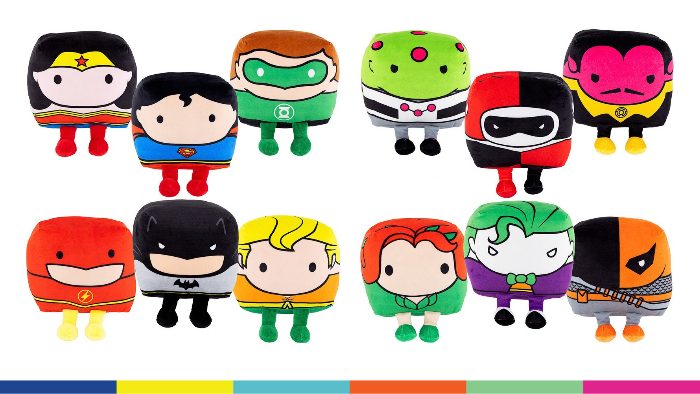
The biggest arcade prize trends for 2027 follow what is happening in the wider toy market. Adults are buying more toys than ever, licensed characters drive a large share of sales, and guests want prizes with personality, texture, and display appeal. Here are the trending redemption prizes to plan your 2027 counter around.
Movie, Anime and Gaming Licenses
Why it’s trending: Licensed products make up more than a third of U.S. toy sales, according to The Toy Association. Familiar characters stand out on a crowded counter and give guests a reason to choose your prize over a generic one.
2027 titles to watch: Several big, animated releases are slated for 2027, including Spider-Man: Beyond the Spider-Verse (June), Shrek 5 (June), Teenage Mutant Ninja Turtles: Mutant Mayhem 2 (August), and Frozen III (November). Anime, K-pop, and gaming properties also keep growing, often driven by streaming hits rather than theatrical releases.
What to stock: Licensed arcade prizes timed to release windows, including plush, keychains, figures, and blind boxes. Bring them in a few weeks before a film opens and plan to rotate them out as interest fades.
Best tier: High-tier and premium.
Collectibles and Blind Boxes
Why it’s trending: Blind boxes and mini collectibles are one of the fastest-growing toy categories, and The Toy Association names collectibles, bag charms, and clip-on minis as a top trend for tweens and teens. The surprise of opening a box, and the chase to complete a set, keeps players coming back.
What to stock: Blind box prizes, mystery packs, bag charms, clip-on minis, and series collectibles with visible “collect them all” checklists. Display the full set so players can see what they are chasing.
Best tier: Mid-tier and high-tier.
Kid-Ult Prizes for Teens and Adults
Why it’s trending: Adult buyers, often called kid-ults, account for roughly a quarter of U.S. toy sales, according to The Toy Association. At the prize counter, that means teens, college students, and parents are redeeming tickets for themselves, not only for their kids.
What to stock: Kid-ult toys with display value, like collectible figures, desk toys, novelty plush, retro gaming items, and licensed merchandise from properties adults grew up with.
Best tier: High-tier and premium.
“Ugly Cute” Characters
Why it’s trending: Quirky, slightly odd-looking characters have become a major sub-trend in plush and collectibles, popularized by viral collectible brands. They appeal to both kids and adult collectors who want something with personality rather than a classic teddy bear.
What to stock: Monster plush, goofy-faced characters, oddball animals, and mini collectible figures with exaggerated features. Fugglers, with their toothy grins and odd little faces, are a standout example.
Best tier: Mid-tier and high-tier.
Shop Fugglers at A&A Global
A&A Global is the exclusive redemption distributor for ZURU, the makers of Fugglers. Shop our ZURU collection to bring the internet’s favorite ugly cute plush to your prize counter.
Flocked Toys
Why it’s trending: Texture is a big part of how guests choose a prize. Flocking adds a soft, velvety finish to toys that are usually smooth plastic or vinyl, so they look and feel different from everything else on the counter.
What to stock: Flocked figures, flocked animals, flocked mini collectibles, and flocked squishy or stretchy toys.
Best tier: Mid-tier.
Therapeutic and Sensory Play
Why it’s trending: The Toy Association’s “Cozy Culture” trend points to demand for tactile, calming, screen-free toys. Tweens and teens also use toys for stress relief, and scented and multisensory features are showing up across slime, plush, and squishies.
What to stock: Fidgets, squishies, slime, stretchy and sticky toys, scented plush, and weighted or textured items.
Best tier: Impulse and mid-tier.
Ducks
Why it’s trending: Ducks have become a social media favorite, from rubber duck collecting to duck-themed plush and accessories. Their low price point makes them easy wins at the counter or in cranes.
What to stock: Themed rubber ducks, duck plush, duck keychains, and collectible duck series.
Best tier: Impulse and mid-tier.
Plant-Themed Prizes
Why it’s trending: Nature-inspired designs fit the cozy, calming direction of current toy trends. Plant-themed items also appeal to teens and adults who decorate desks, dorms, and shelves.
What to stock: Plush succulents and cacti, potted plant plush, flower-themed squishies, and plant-shaped keychains.
Best tier: Mid-tier.
Food-Shaped Toys and Plush
Why it’s trending: Food characters are a long-running favorite that keeps finding new life on social media. Snack and dessert designs are easy to recognize and fun to collect in sets.
What to stock: Food plush (sushi, boba, fruit, desserts), food-shaped squishies, and scented food-themed toys.
Best tier: Mid-tier and high-tier.
Nostalgia and Y2K Throwbacks
Why it’s trending: The Toy Association’s “Throwback Toys” trend notes that older toys are going viral again, often with teens and young adults who never owned them the first time. Parents also love sharing toys from their own childhood.
What to stock: Retro handhelds, classic novelty toys, Y2K-inspired accessories, and licensed characters from the 90s and 2000s.
Best tier: Mid-tier and high-tier.
Viral and Social Media-Driven Prizes
Why it’s trending: Toy companies are reacting faster to cultural moments, such as streaming hits to viral videos. Guests often walk up to the counter looking for the exact item they saw online.
What to stock: Small quantities of trending items, ordered quickly and rotated out once interest drops. Watch TikTok and Instagram for what is gaining traction. Squishies (like Nee-Doh’s and dumplings) were huge in 2026, and we anticipate they will be just as popular in 2027.
Best tier: Varies by item. Keep orders small and rotate often.
Best Redemption Prize Categories to Stock in 2027
Trends tell you what guests want. Categories tell you how to fill the counter. A balanced mix of arcade redemption prizes covers every ticket tier, every age group, and every season.
Here are the core categories to stock in 2027 and what to look for when buying each one.
Plush Prizes
Plush is the backbone of most prize counters and crane machines. It works at every tier, from small clip-on plush at the impulse level to large licensed plush as a premium showpiece. When buying wholesale plush for arcades, plan for two different uses:
Counter plush: Prizes guests redeem with tickets. Variety and display appeal matter most here. Mix licensed and generic characters, offer a range of sizes, and lean into 2027 trends like ugly cute, food, and plant designs. Fugglers are a strong pick for operators who want an ugly cute line with name recognition.
Crane machine plush: Prizes won directly in claw machines. Crane machine plush has its own buying rules:
- Size to the machine. Match plush size to the claw and the cabinet. Plush that is too large crowds the machine and is hard to grab, while plush that is too small looks underwhelming through the glass.
- Choose claw-friendly shapes. Plush with a defined head, limbs, or a tag area gives the claw something to grip.
- Pay attention to fill. Plush that is too firm slips out of the claw, and plush that is too soft collapses. Consistent fill helps keep machine payout predictable.
- Fill the machine visually. A full, colorful cabinet with a few licensed or trending characters on top draws more play than a half-empty one.
Premium Prizes
Premium redemption prizes sit at the top of the counter and give players a long-term goal. These high-ticket arcade prizes may not move every day, but they make the counter look exciting and encourage guests to save tickets across visits.
What to stock: Large and jumbo plush, licensed showpieces, electronics like headphones, speakers, and handheld games, collectible figures, and kidult items with display value.
Buying tips:
- Keep two to three premium items visible at eye level or above the counter, so they are the first thing guests see.
- Price premium items close to cost so they feel reachable.
- Rotate premium prizes less often than impulse items, but refresh them at least seasonally.
- Check out A&A Global’s Premium Prize lineup with PIA: https://www.aaglobal.com/premium-products
Candy Prizes
Redemption candy is one of the fastest-moving categories on the counter. It works at the impulse tier, appeals to every age group, and gives players with only a few tickets an instant win. Novelty candy, like candy in toy dispensers, oversized lollipops, and licensed candy, also works well at the mid-tier because it doubles as a toy.
What to stock: Individually wrapped candy, novelty candy, sour and gummy candy, candy toys, and licensed candy. A&A Global’s Candy Division Koko’s offers licensed candy from ICEE, Dippin Dots, and Slush Puppie and are built for redemption and vending.
Buying tips:
- Check shelf life and date codes. Rotate stock first in, first out.
- Store candy away from heat and direct sunlight, especially chocolate and gummies in summer.
- Buy novelty candy wholesale in assortments so you can test new flavors and formats without overcommitting.
- Label candy clearly for allergens and keep wrapped candy separate from loose toys.
Toys and Novelty Items
Toys and novelty items are some of the most flexible prizes on the counter. They cover the impulse and mid tiers and are where many 2027 trends show up first, especially sensory play.
What to stock: Fidgets, squishies, slime, sticky and stretchy toys, flocked toys, mini collectibles, keychains, jewelry, and pop-culture novelties.
Buying tips:
- Refresh novelty items monthly. Their popularity peaks quickly.
- Buy in mixed assortments to test which styles sell before ordering by the case.
- Watch social media for viral novelty toys and order small quantities fast.
Bin Items
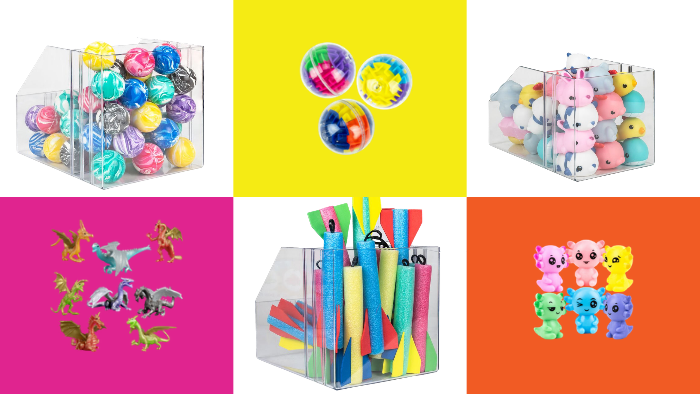
Bin items are the low-ticket prizes that keep the counter moving. They give younger players and casual guests something to redeem right away and make your higher tiers feel more valuable.
What to stock: Bulk bin prizes like stickers, tattoos, mini toys, erasers, rings, bouncy balls, and small candy. Bin items usually fall between 1 and 50 tickets.
Buying tips:
- Buy bulk bin prizes in mixed assortments for variety.
- Keep bins full and organized. Messy, half-empty bins slow down checkout and look less appealing.
- Use clear bins at kid height so younger players can browse on their own.
Balls
Balls are an easy, high-value prize at the impulse and mid tiers. They work for every age group and are especially popular at bowling centers, FECs, and venues with active play areas.
What to stock: Bouncy balls, light-up balls, stress balls, sports-themed mini balls, and inflatable or knobby balls for higher tiers.
Buying tips:
- Mix sizes so balls can fill several tiers.
- Use sports-themed balls during major sports seasons and local team playoffs.
- Display bouncy balls in clear vending or bin displays to show off color.
Rubber Ducks
Rubber duck prizes are a low-cost way to tap into the ducks trend. They are affordable, collectible, and easy to theme for holidays, sports, and pop culture.
What to stock: Bulk rubber ducks in themed assortments, like holidays, careers, animals, and sports, plus light-up and glow ducks and collectible duck series.
Buying tips:
- Buy bulk rubber ducks in mixed themes to encourage collecting.
- Swap in seasonal ducks for holidays and summer.
- Display ducks as a full set so guests can see what they are collecting.
Capsule and Vending Toys
Capsule and vending toys bring the excitement of a surprise prize to the counter and to vending areas. They work well as mid-tier mystery prizes and fit into the blind box trend.
What to stock: Pre-filled capsule toys, mini figures, bouncy balls, sticky toys, and licensed capsule series.
Buying tips:
- Match capsule size to your machines.
- Refresh capsule assortments regularly so repeat guests see something new.
- Use capsule toys as a low-staff prize option in vending areas or unattended spots.
Glow and Light-Up Prizes
Glow and light-up prizes stand out in darker arcade spaces and are popular at birthday parties, cosmic bowling, and nighttime events.
What to stock: Glow sticks, glow bracelets and necklaces, light-up toys, light-up balls, lamps, and LED wall signs.
Buying tips:
- Check that battery-powered toys meet current safety rules. Products with button or coin batteries need secure compartments and warning labels (see Safety and Compliance below).
- Stock up before Halloween, New Year’s, and summer events.
- Track glow stick shelf life. Older stock can lose brightness.
Seasonal and Holiday Prizes
Rotating seasonal prizes give guests a reason to visit the counter again and again. Holiday and seasonal items often take up 15% to 20% of an annual prize budget.
What to stock: Valentine’s, Easter, summer, back-to-school, Halloween, and winter holiday prizes, plus themed plush, candy, and novelty items.
Buying tips:
- Order seasonal prizes early. Lead times grow before peak seasons (see the 2027 Buying Calendar below).
- Build a buffer into seasonal orders, but plan to clear leftovers through discounts or bundles.
- Pair seasonal prizes with seasonal counter displays for a quick visual refresh.
Best Redemption Prizes by Venue Type
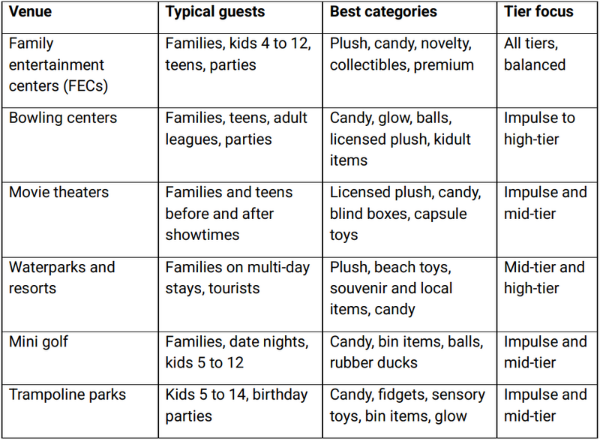
The best prize counter for a trampoline park looks different from the best counter for a movie theater. Guest age, visit length, and how often guests return all change what sells. Use this table as a starting point, then adjust based on your own sales data.
2027 Redemption Prize Buying Calendar
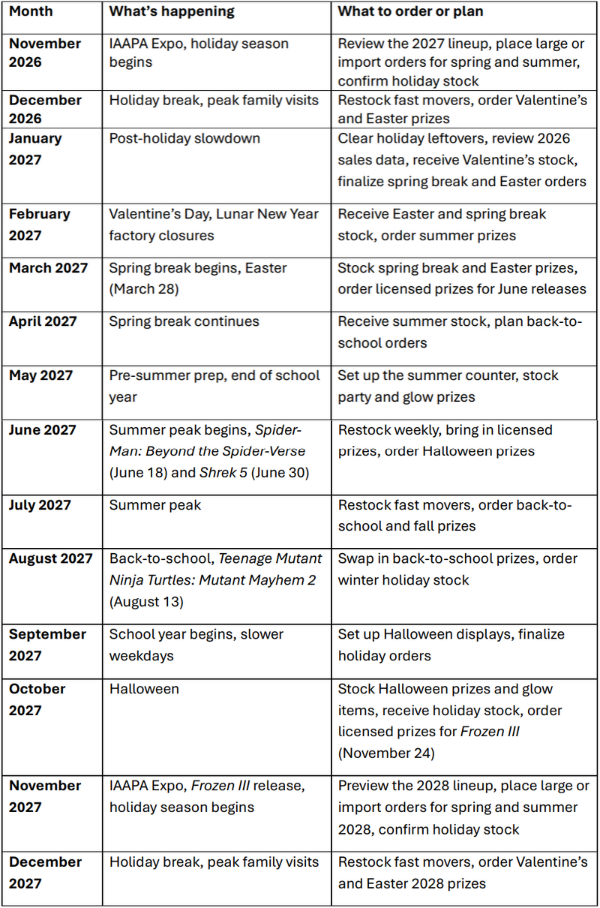
Knowing when to order arcade prizes is just as important as knowing what to order. If you order too late, popular items sell out or arrive after the rush. If you order too early, cash and storage space get tied up in stock that isn’t moving. Use this calendar to plan seasonal redemption prizes and peak-season inventory for 2027.
How Far Ahead Should You Order Arcade Prizes?
Lead times depend on where the product ships from and how much you need.
- In-stock wholesale items: Usually ship within days to a couple of weeks. They work best for restocking top sellers and filling gaps.
- Large or seasonal orders: Place them 6 to 8 weeks before you need them on the counter, so you have time to receive, price, and display.
- Custom, private label, or direct import orders: Often take 3 to 6 months, sometimes longer. Plan these around manufacturing and ocean freight timelines.
Overseas factories also close for several weeks around Lunar New Year, which falls on February 6, 2027. Orders placed in December and January can be delayed, so build that downtime into spring and summer planning.
Month-by-Month Buying Calendar
Tips for Seasonal Redemption Prizes
- Order seasonal stock in waves. Start with a base order, then reorder what sells, instead of buying the full season at once.
- Build in a small buffer for peak weeks like spring break, summer, and holidays.
- Plan an exit for leftovers. Mark down seasonal items, bundle them, or move them into party packs after the holiday.
- Use your sales data. Last year’s bestsellers and stockouts are your best guide to this year’s quantities.
Prize Counter Merchandising and Display
Great prizes won’t sell themselves if guests can’t see them. A well-planned prize counter display helps guests find what they can afford, sparks excitement about what they could save for, and speeds up checkout during busy times. Good prize counter design turns your counter from a storage area into a sales tool.
Display Boxes That Sell
Display boxes keep small prizes organized, visible, and easy to restock. They also make the counter look full and intentional, even with low-cost items.
Why they work:
- Organization: Small items like candy, bin toys, and rubber ducks stay sorted instead of mixing together.
- Visibility: Guests can see the full assortment at a glance, which helps them decide faster.
- Restocking: Staff can see right away which items are running low.
- Easy refreshes: Swapping one display box for another makes a quick seasonal update.
Tips for using display boxes:
- Use pre-filled display boxes for fast-moving impulse items so restocking is quick.
- Put the ticket value on the front of every box.
- Group display boxes by tier, so all 10-ticket items sit together, then all 25-ticket items, and so on.
- Keep boxes full. A half-empty display makes the whole counter look picked over.
Planogram Services for Redemption Counters
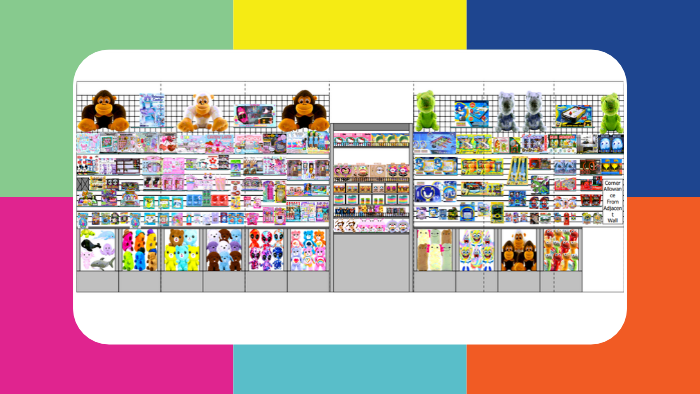
A planogram is a map of where every prize goes on your counter, shelves, and walls. A redemption counter planogram makes sure each tier has the right amount of space, high-margin items get the best placement, and your counter looks consistent from week to week and location to location.
Benefits of a redemption counter planogram:
- Better use of space: Every shelf and display has a purpose.
- Consistent counters: Multi-location operators can keep the same look and assortment across every venue.
- Faster restocking: Staff know exactly where every item goes.
- Smarter buying: A planogram shows how much of each category you need to fill the counter, which makes ordering easier.
Many prize suppliers offer planogram services, where a merchandising team designs a counter layout based on your space, guest mix, and budget. A&A Global’s planogram services.
Counter Layout Tips: Eye Level, Grouping, and Price Visibility
Small layout choices can make a big difference in how guests shop your counter. Use these prize counter design basics:
Put the right prizes at the right height.
- Kid height (lower shelves and front-of-counter bins): Impulse and low-ticket items younger players can reach and browse on their own.
- Eye level: Mid-tier and high-tier prizes, especially trending and licensed items.
- Above the counter and on back walls: Premium prizes and large plush that draw attention from across the room.
Group prizes by ticket value. Organizing by tier helps guests quickly find what they can afford, which keeps the line moving during busy times.
Make every price easy to see. Put a clear ticket value on every prize, display box, and shelf. Guests shouldn’t have to ask what something costs.
Feature trending prizes. Give new and trending items their own “New for 2027” or “Hot Right Now” space so repeat guests notice them right away.
Keep the counter clean and full. Restock often, remove damaged items, and fill gaps right away. A full, organized counter tells guests your prizes are worth playing for.
Plan for busy times. During parties and peak hours, a pre-packed grab-and-go section or party pack display can speed up checkout for large groups.
Ordering Tips: Case Packs, Minimums, and Lead Times
Buying wholesale redemption prizes the right way helps you keep the counter full without tying up cash in slow-moving stock.
Mixing Assortments vs. Buying by the Case
Mixed assortments bundle several styles or characters into one order. They work best for:
- Testing new products before committing to larger quantities
- Smaller counters that need variety more than volume
- Novelty, collectible, and trend-driven items
Buying by the case means ordering a full case pack of a single item. It works best for:
- Proven best sellers you reorder often
- Impulse items, candy, and bulk arcade prizes that move fast
- Multi-location operators who need the same item at every venue
Many operators combine the two, buying best sellers by the case and testing new items in assortments. Ask your supplier about order minimums and case pack sizes, and plan orders to hit free shipping or volume pricing thresholds when you can.
How Tariffs and Supply Chain Affect 2027 Prize Pricing
Most toys and prizes sold in the U.S. are made overseas, so tariffs and shipping costs affect what operators pay. Tariffs on toys imported from China have changed several times in recent years. In September 2026, toys were named the largest category in a new U.S.-China tariff relief framework, though final rates were still awaiting confirmation at the time of writing.
What this means for your 2027 buying:
- Expect some price movement. Prize costs may shift as tariff rates are finalized.
- Review your ticket pricing. If prize costs change, adjust ticket values to protect your margin.
- Order key items early. Locking in seasonal and peak-season orders ahead of time reduces the risk of price changes and delays.
- Work with a supplier that keeps U.S. inventory. In-stock domestic inventory shortens lead times and protects you from shipping delays.
How to Track Which Prizes Are Working
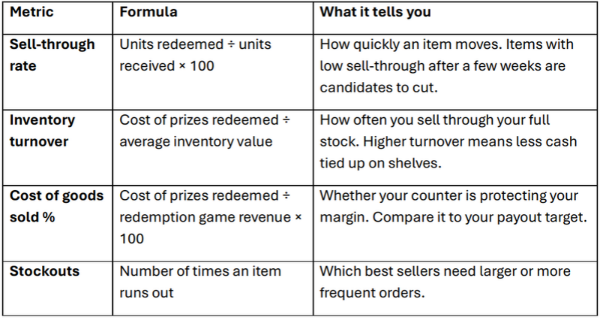
Good prize counter inventory management turns guesswork into data. Tracking a few simple numbers shows you what to reorder, what to cut, and whether your counter is protecting your margins.
Key Metrics to Track
See the Full 2027 Prize Lineup at IAAPA
Ready to plan your 2027 prize counter? A&A Global’s new 2027 catalog debuts at IAAPA Expo 2026, November 16 to 20 at the Orange County Convention Center in Orlando. Visit us at Booth #S3412 to see the newest trending prizes, licensed lines, and exclusive products in person.
Arcade Redemption Prize FAQs
What are the most popular arcade redemption prizes?
The most popular arcade redemption prizes are plush, candy, and novelty toys, followed by collectibles, blind boxes, and licensed prizes. Candy and bin items move fastest because they are low-ticket, while plush and licensed items are popular mid-tier and high-tier choices. For 2027, kidult collectibles, ugly cute characters, and sensory toys are growing quickly.
How much should an arcade spend on redemption prizes?
Most arcades aim for prize costs of about 25% to 30% of redemption game revenue. A common way to split the prize budget is about 30% on impulse items under $1, 40% on mid-tier items between $1 and $5, and 30% on high-tier and premium prizes. Adjust based on your venue, guest mix, and payout settings.
What is a good payout percentage for redemption games?
A healthy redemption payout percentage is usually between 25% and 35%. Payout is the value of tickets given out divided by game revenue. Some games, like wheel and jackpot games, run higher, while classic skill games often run lower. Manage payout across your whole game room instead of one machine at a time.
How often should I change my prize counter?
Many operators refresh their prize counter every 4 to 6 weeks. Restock best sellers weekly, add new items and remove slow sellers monthly, and swap in seasonal prizes for major holidays and peak seasons. Trend-driven and viral items should rotate faster, since their popularity can fade within weeks.
What prize trends should arcades watch in 2027?
The top arcade prize trends for 2027 include licensed movie, anime, and gaming prizes, collectibles and blind boxes, kidult toys, ugly cute characters, flocked toys, and sensory play. Ducks, plants, food-shaped toys, nostalgia, and viral social media prizes are also popular. Major 2027 releases include Shrek 5, Spider-Man: Beyond the Spider-Verse, and Frozen III.
Where can I buy redemption prizes wholesale?
You can buy redemption prizes wholesale from specialty distributors that serve arcades, FECs, and amusement venues. Look for a supplier with a wide assortment, U.S.-based inventory, safety-tested products, and support like planogram services. A&A Global supplies wholesale redemption prizes, plush, candy, novelty, and vending products to venues nationwide. Shop A&A Global.
Sources: